Begin with the research question
An ingredient can be familiar in cooking and still be poorly understood as a concentrated preparation. The first question is what researchers actually studied: a whole food, a tea, a powder, or an extract with a specified composition. Those forms cannot automatically be treated as interchangeable. Neither can a finding about general fatigue be rewritten as a finding about erectile function.
Men's health is a broad label. It can refer to nutrition, metabolic measures, mood, sexual response, or many other outcomes. A meaningful account names the outcome and the people studied before discussing whether the result might apply elsewhere.
Ginger and the distinction between food and extract
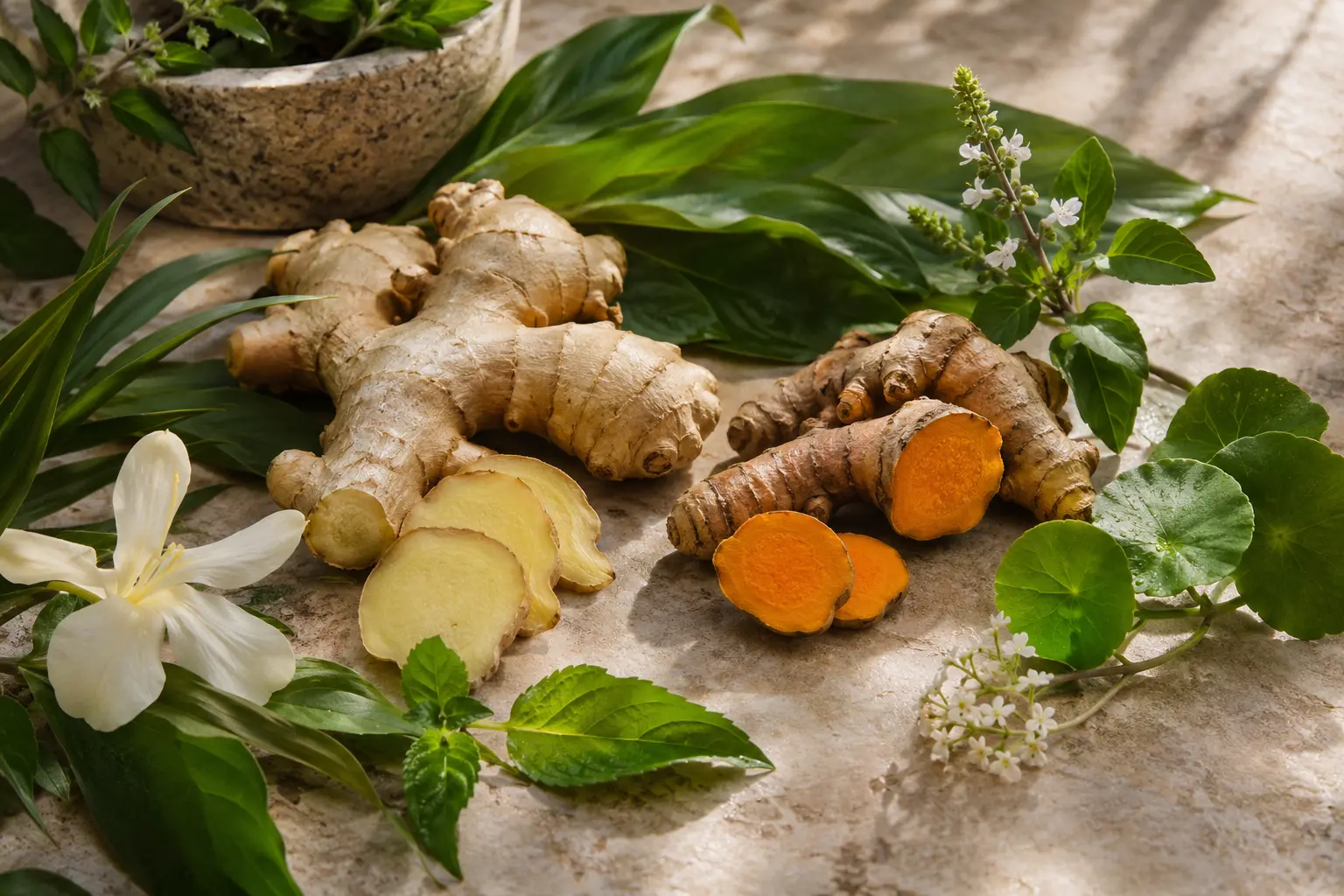
Ginger is a familiar culinary ingredient in Indonesia. Its place in a meal is different from the concentrated preparations that may appear in research or supplement advertising. A study involving a measured extract does not establish that adding ginger to a drink will reproduce the same effect.
Laboratory experiments can suggest biological mechanisms worth investigating. They do not show that a person will experience a clinical benefit. The route from an interesting mechanism to a useful human outcome includes questions about absorption, preparation, study quality, and whether results can be repeated.
Ginseng: a name that needs detail
Asian ginseng, Panax ginseng, has been investigated for several outcomes, including fatigue and sexual function. NCCIH describes limitations in the research, including many small and short studies. Findings should therefore be read in the context of the specific preparation and outcome, rather than turned into a general promise about vitality.
Botanical identity matters: products sharing a familiar name may contain different species or preparations. Potential adverse effects and interactions matter as well. A label describing a product as natural does not establish that it is suitable alongside medicines or for every health condition.
Maca, fenugreek, and persuasive headlines
Maca and fenugreek often appear in discussions of male wellness. Their appearance in a headline is not enough to establish the size, reliability, or relevance of any reported effect. Ask whether there was a comparison group, whether participants were randomly assigned, and whether the outcome was reported by participants or measured in another way.
Also ask who funded the study and whether the tested preparation is described clearly. These questions do not automatically invalidate a study. They help readers avoid treating every publication as equally conclusive. A small preliminary result can be interesting while still leaving the central question unresolved.
Food patterns remain a different subject
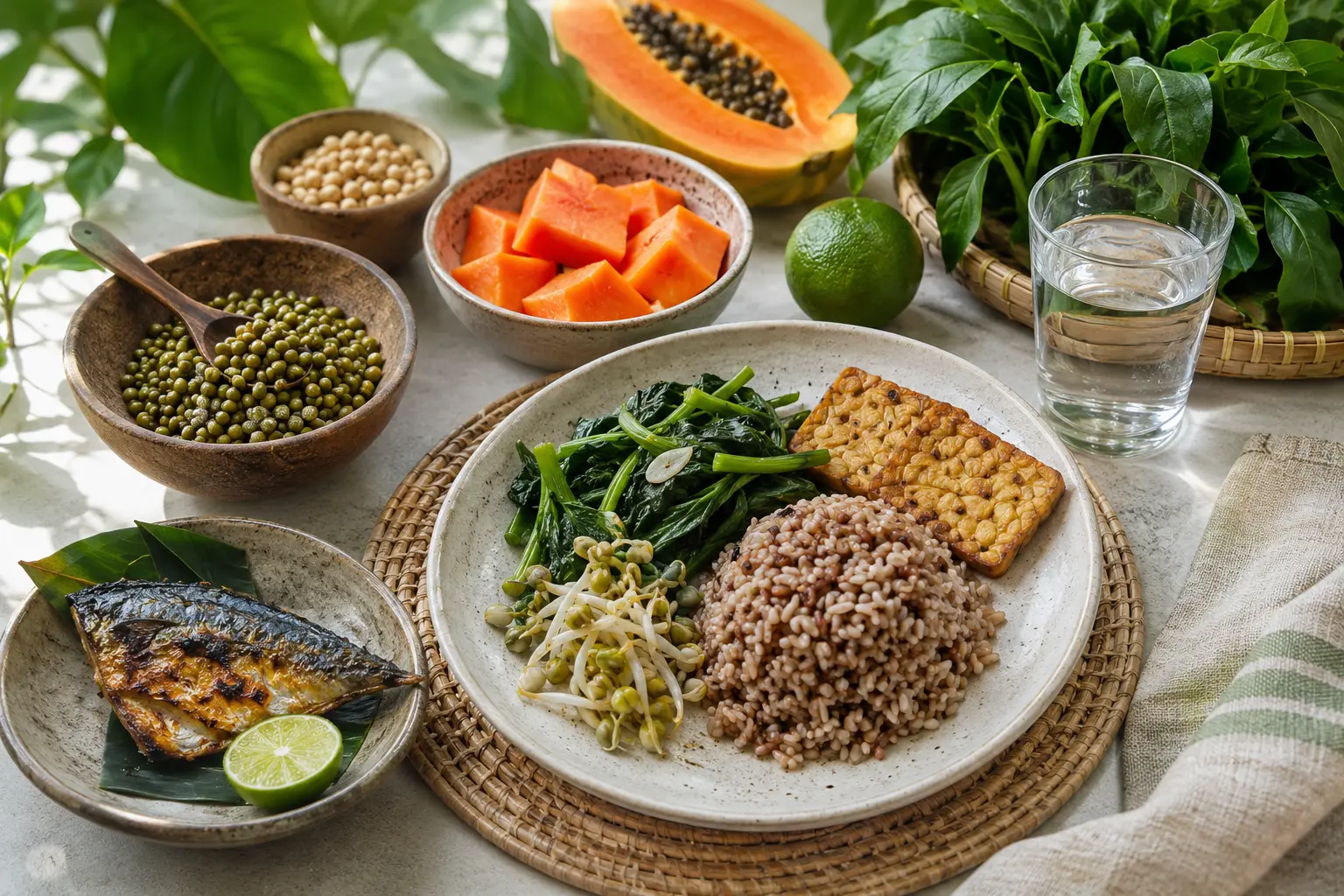
Vegetables, fruit, legumes, whole grains, and other everyday foods contribute nutrients within an overall diet. Their value need not be justified by a sexual-performance claim. Tempeh, beans, leafy vegetables, and familiar fruit can be discussed as foods without transforming them into targeted remedies.
The most useful conclusion is a reading method: identify the ingredient, identify the preparation, identify the people and outcome, then examine uncertainty. Traditional use offers cultural and historical context; human research addresses different questions. Neither tradition nor a laboratory finding should be presented as proof that a botanical will restore erections or raise hormone levels.
Sources & further reading
These resources provide background for the topic; their inclusion does not imply institutional review of Male Vitalis.